No, you cannot delete someone else’s Yelp review yourself. Removal only happens when the review breaks a specific Yelp policy, or when the reviewer deletes it on their own. Your first move is to check the review against Yelp’s removable categories, using Yelp’s own support documentation and a solid evidence file, before deciding whether to flag it or respond publicly instead.
TL;DR:
- Most reviews are only removable if they clearly violate Yelp’s policies, such as being written by a competitor, containing private data, or involving threats or harassment.
- Building and providing concrete, policy-specific evidence is essential, as vague flags are frequently rejected and require detailed proof like screenshots, logs, or profiles.
- Repeatedly attempting to flag with stronger evidence is the best escalation, rather than relying solely on initial efforts or legal action unless the review involves false factual claims causing measurable harm.
- Responding publicly with a professional, non-confrontational message is often more effective for reputation repair than pursuing review removal.
- Hiring a reputation management service can streamline evidence gathering, escalation, and long-term review growth, especially after multiple flag denials or coordinated smear campaigns.
Table of Contents
- What Yelp Will Remove (And What It Won’t)
- How to Flag a Review and Build Evidence That Actually Works
- When Removal Fails: Responding Publicly and Repairing Your Reputation
- Escalation Paths: Appeals, Support Tickets, and Legal Options
- What a Real Evidence File Looks Like
- Why Most Businesses Handle This Backwards
- Get Help Assembling Your Evidence and Rebuilding Your Rating
- Where This Guidance Comes From
- Sources
- FAQ
What Yelp Will Remove (And What It Won’t)
Yelp has narrow rules for what counts as a removable review, and “this is unfair” isn’t one of them. According to Yelp’s own review policy, a review qualifies for removal if it falls into one of these categories:
- Conflict of interest — written by a competitor, an employee, or someone with a personal stake in the outcome
- Non-first-party content — the reviewer describes an experience someone else had, not their own
- Private or personal information — the review publishes a phone number, home address, or other identifying details
- Threats, harassment, or hate speech — content that crosses from criticism into abuse
- Plagiarism — text lifted from another review or source
- Wrong business — the review is clearly about a different company entirely
Here’s the part most business owners get wrong: Yelp will not remove a review just because it’s a bad review. Opinions (“the food was bland,” “the staff seemed rude”) and disputed facts (“they said it would take an hour, it took two”) don’t qualify, even when you’re certain the customer is exaggerating. Yelp also runs a separate “Not Recommended” filter, powered by an automated algorithm, that already hides reviews it considers unreliable. That filter operates independently of the flagging process and isn’t something you can request directly.
Flagging a review costs nothing, and Yelp typically emails a decision within a few business days once a moderator reviews the flag. That’s the good news. The bad news: a huge share of flags get rejected on the first try, mostly because the submission lacks specific evidence.
How to Flag a Review and Build Evidence That Actually Works
Flagging is the easy part. Building a case a moderator will act on is where most owners fall short.
- Log into Yelp for Business and open the review in question.
- Click the flag icon below the review text.
- Select the violation category that matches your situation (conflict of interest, private information, etc.).
- Attach supporting evidence in the text box Yelp provides.
- Submit the flag and watch for an email decision.
The evidence you attach determines everything. A flag that says “this isn’t true” gets rejected almost automatically. A flag that says “this reviewer’s account has posted three near-identical negative reviews for competing businesses in the same zip code, and our booking system shows no appointment under this name or date” gives a moderator something concrete to check.
Build a short cover memo before you submit. List each piece of evidence, then state the exact guideline line it supports. If you’re claiming the review isn’t from a real customer, attach your appointment log or point-of-sale records showing no transaction matches the reviewer’s timeline. If you’re claiming harassment, screenshot the language directly. If you’re claiming a conflict of interest, link the reviewer’s profile to a competing business.
Pro Tip: Vague flag submissions get rejected by automated review far more often than specific ones. Screenshots, receipts, and booking records tied directly to a named Yelp guideline are what get a human moderator to actually look twice.
If Yelp denies your flag, you have two moves left: resubmit with sharper, more specific evidence, or escalate through Yelp Support and reference your original case. If your business advertises on Yelp, your account representative may be able to route a moderation question faster than the standard support queue, though advertising never guarantees a review gets pulled.
When Removal Fails: Responding Publicly and Repairing Your Reputation
Most flags don’t result in removal, and Yelp’s own guidance leans toward professional public responses over expecting a takedown. That’s not a consolation prize. A calm, well-written reply often does more for your reputation than a successful removal would have.
For a service complaint, something like this works: “We’re sorry your visit didn’t go the way you expected. We’d like to understand what happened and make it right. Please reach out to us directly at [contact info] so we can resolve this.” No defensiveness, no argument, just an offer to fix it.
For a factual dispute, correct the record without attacking the reviewer: “We checked our records and don’t see an appointment under this name for the date mentioned. We’d welcome the chance to speak directly and clear this up.” Send a private message too, requesting contact and offering a remedy. Never mention removal in exchange for anything, and never offer payment or discounts tied to deleting a review. That crosses into territory Yelp actively polices.
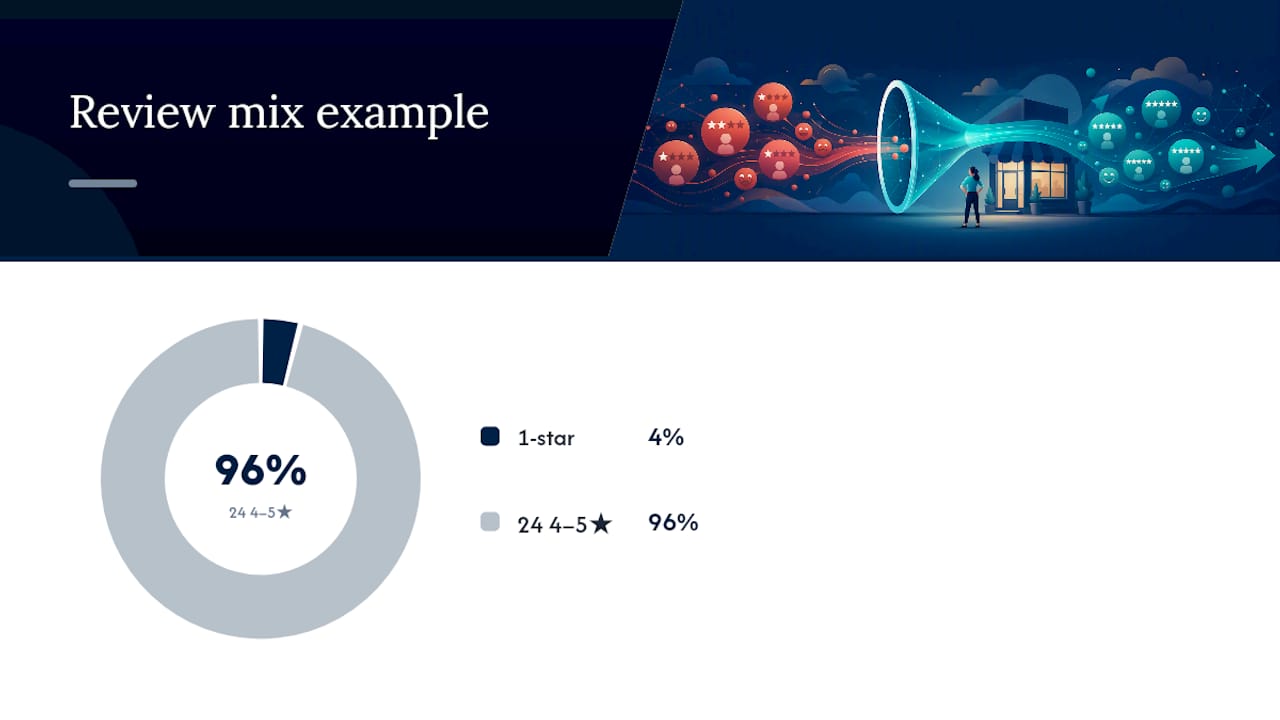
The longer-term fix is volume. A single one-star review loses its weight when it’s surrounded by two dozen recent four and five-star reviews. Ask happy customers for reviews right after a good experience, ideally through a natural prompt like a receipt footer or a follow-up text, never through mass solicitation campaigns that violate Yelp’s rules against review-gating.
| Situation | Best move | What to avoid |
|---|---|---|
| Reviewer is a real customer with a valid complaint | Public reply + private outreach | Arguing publicly |
| Reviewer’s identity or claims look questionable | Flag with evidence | Assuming Yelp will “just know” |
| One bad review among many good ones | Request more reviews | Buying or trading reviews |
Tradewinds United Media’s guide to responding to bad reviews walks through longer templates for trickier situations, including reviews that mix a legitimate complaint with an unfair accusation.
Escalation Paths: Appeals, Support Tickets, and Legal Options
If your first flag gets denied, resubmitting isn’t giving up, it’s the normal next step. Practitioner guides on Yelp review removal consistently point to the same pattern: refine your evidence, name the exact guideline again, and resubmit rather than assuming the door is closed.
Your escalation options, roughly in order:
- Resubmit the flag with sharper, more specific evidence than the first attempt.
- Open a ticket directly with Yelp Support, referencing your rejected case number.
- Use Yelp’s legal request portal, but only if you already have a court order compelling removal, which requires a lawsuit first.
- Consult an attorney if the review contains a false factual claim, not just an unflattering opinion.
Here’s where owners get expensive advice wrong: suing over a bad review is legally possible, but according to FindLaw’s guidance on suing over bad reviews, it only makes sense when the review contains a provably false statement of fact that caused real, demonstrable financial harm. “This place is terrible” is an opinion, not a defamation case. “This restaurant served me expired food and I was hospitalized” (when that never happened) is a different story entirely. Litigation is slow and costly, and attorneys generally recommend it only when the false claim is clear and the damages are significant enough to justify the expense.
Hire outside help when you’re facing a coordinated pattern of fake reviews, repeated flag denials on a clearly qualifying review, or reputational damage large enough that the cost of professional help is smaller than the cost of doing nothing.
What a Real Evidence File Looks Like
Moderators reward specificity. A workable evidence file includes timestamped screenshots, invoices or booking records tied to exact dates, and any pattern showing the reviewer’s account posting similar complaints against competitors. Write your evidence summary the way you’d write a short legal brief: state the guideline, list the proof, stop.
Signs you’re past the DIY stage: multiple denied flags on a review that clearly violates policy, a coordinated string of suspicious reviews hitting your profile at once, or a reputation problem spreading faster than you can respond to it alone. A reputation manager worth hiring builds the evidence map, files the escalation, and runs an ongoing review-growth program instead of chasing one review at a time.
Why Most Businesses Handle This Backwards
The instinct every business owner has is to treat a bad Yelp review like a fire that needs putting out immediately. That instinct leads to rushed, vague flag submissions, the exact kind Yelp’s moderators reject without much thought. The businesses that actually get reviews removed treat it like building a case file, not filing a complaint.
Here’s what conventional advice gets wrong: most guides tell you to “flag anything unfair” and hope Yelp agrees with your read of the situation. It won’t, not without a specific policy violation and evidence to back it. The businesses that succeed spend more time building the evidence map than clicking the flag button.
My honest read: removal should be your second priority, not your first. Spend your energy on the public reply and the review-growth habit before you spend it drafting appeals. A well-handled public response to a bad review often does more for a potential customer’s trust than a successful takedown ever could, because it shows how you handle problems, not just whether you avoid them.
— Michael
Get Help Assembling Your Evidence and Rebuilding Your Rating
If you’ve read this far and you’re still staring at a review that’s costing you customers, you don’t have to build the evidence file, write the appeal, and run a review-growth program alone while also running your business. A professional reputation management service can handle the workload for small businesses: assembling timestamped evidence, mapping it to the right Yelp guideline, drafting the escalation, and writing public and private response templates that sound personalized, not like form letters.

Beyond the immediate fire, Tradewinds United Media’s reputation management and local SEO service monitors new reviews across platforms, runs ethical review-growth programs, and reports on how your rating moves over time. Combined with Google Business Profile optimization, that means a bad review has less room to define your search results. If a single review is threatening your bottom line, request a reputation audit and get a specific plan instead of a generic checklist.
Where This Guidance Comes From
- When should I report a review? — Yelp for Business
- How do I remove a review? — Yelp for Business support
- How to Remove a Yelp Review About Your Business — Minc Law
This article is general information, not a substitute for advice from a qualified lawyer. Consult a qualified legal professional about your own circumstances before acting on anything here.
Sources
- When should I report a review? — Yelp for Business
- How do I remove a review? — Yelp for Business support
FAQ
Is it possible to get a Yelp review removed?
Yes, but only if the review violates a specific Yelp policy, such as being written by a non-customer, containing private information, or involving a conflict of interest. Opinion-based negative feedback, even when it feels unfair, generally does not qualify under Yelp’s review policy.
How do I get bad reviews removed from Yelp?
Flag the review through Yelp for Business, select the violation category, and attach specific timestamped evidence tied to that exact guideline. Vague submissions without proof are usually rejected, so map every piece of evidence to the policy line you’re citing.
Does Yelp delete bad reviews just because a business disputes them?
No. Yelp does not mediate factual disputes or delete reviews simply because a business disagrees with a customer’s account of events. Removal requires an actual policy violation, not a difference of opinion about what happened.
Is it illegal to remove negative reviews?
Deleting your own honest negative review isn’t illegal, but paying or pressuring a business to delete a review it never actually received, or manipulating reviews through fake accounts, can violate platform policy and consumer protection law. Suing a reviewer over their review is legal only when the review contains false factual statements causing real, provable harm, according to FindLaw’s guidance on this exact question.